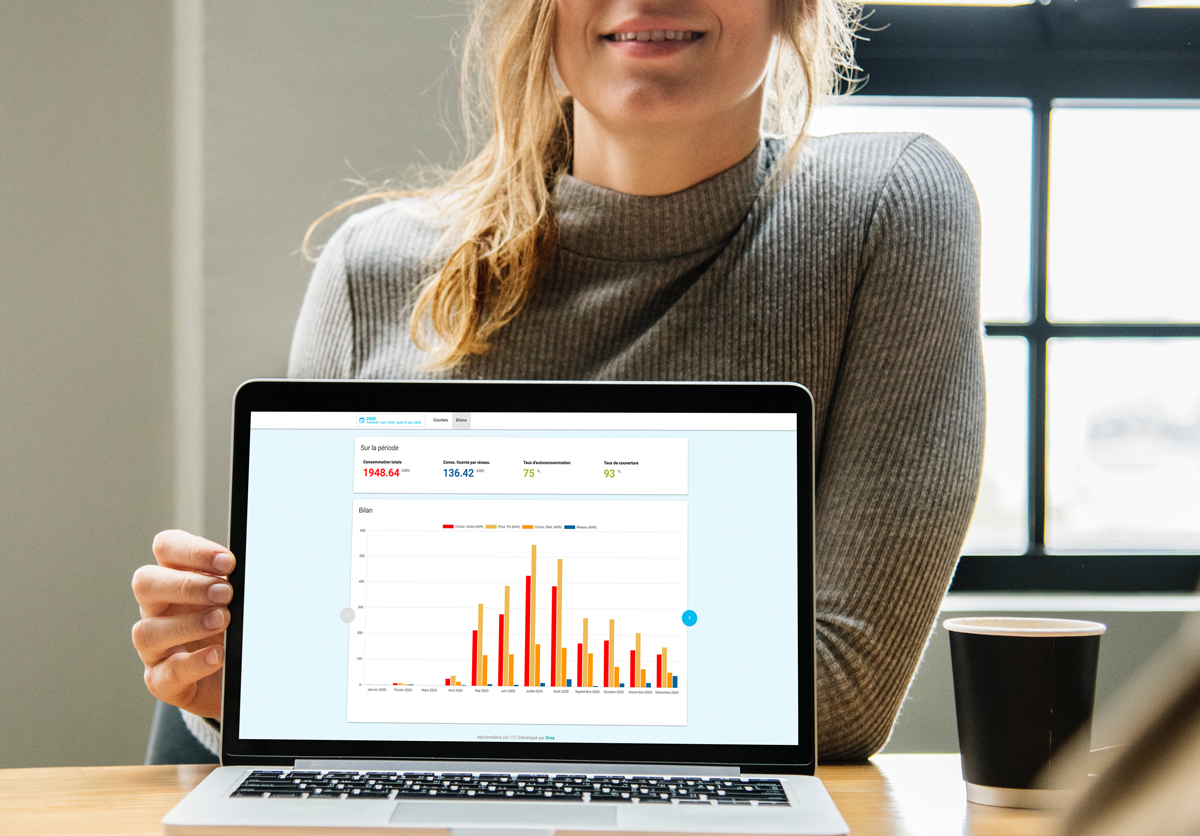
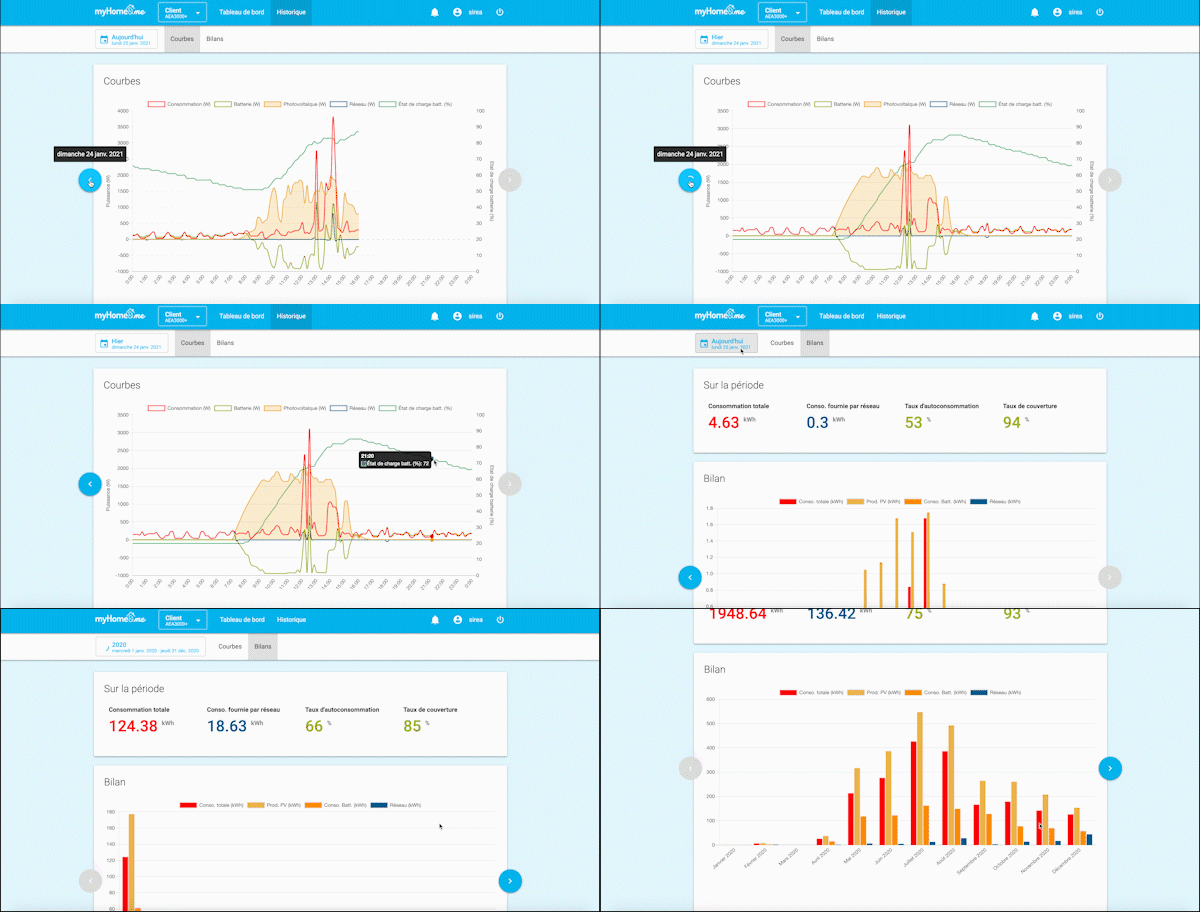
The MyHome&me self-consumption tracking application received a new update at the beginning of this year that affects all our users without exception.
MyHome&me v0.17 – Energy balances
Since its launch, the MyHome&me application has enabled users equipped with an AEA self-consumption system to consult in real time the information related to the energy efficiency of your home.
Functionalities such as daily history or the calculation of the self-consumption rate and the coverage rate were also very much appreciated by users.
From now on, the application allows these « self-consumers » to consult their energy balances for the year or month of their choice. The coverage rate as well as the self-consumption rate are also calculated over the selected period.
This feature allows AEA cabinet owners to go further in the analysis of their self-consumption rate in order to achieve optimal energy efficiency.
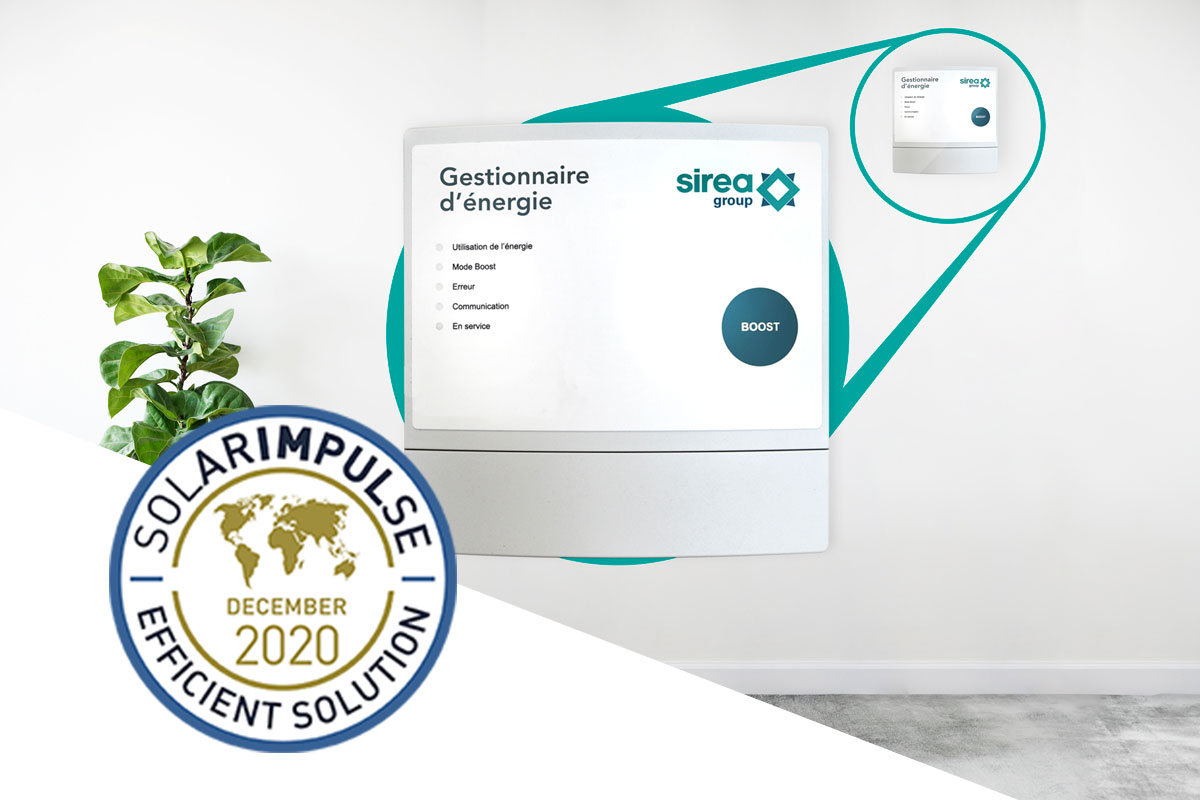
We are proud to announce that our energy manager dedicated to controlled self-consumption, the SmartEMS, will be one of the 1000 solutions selected by the Solar Impulse Foundation for the Climate!
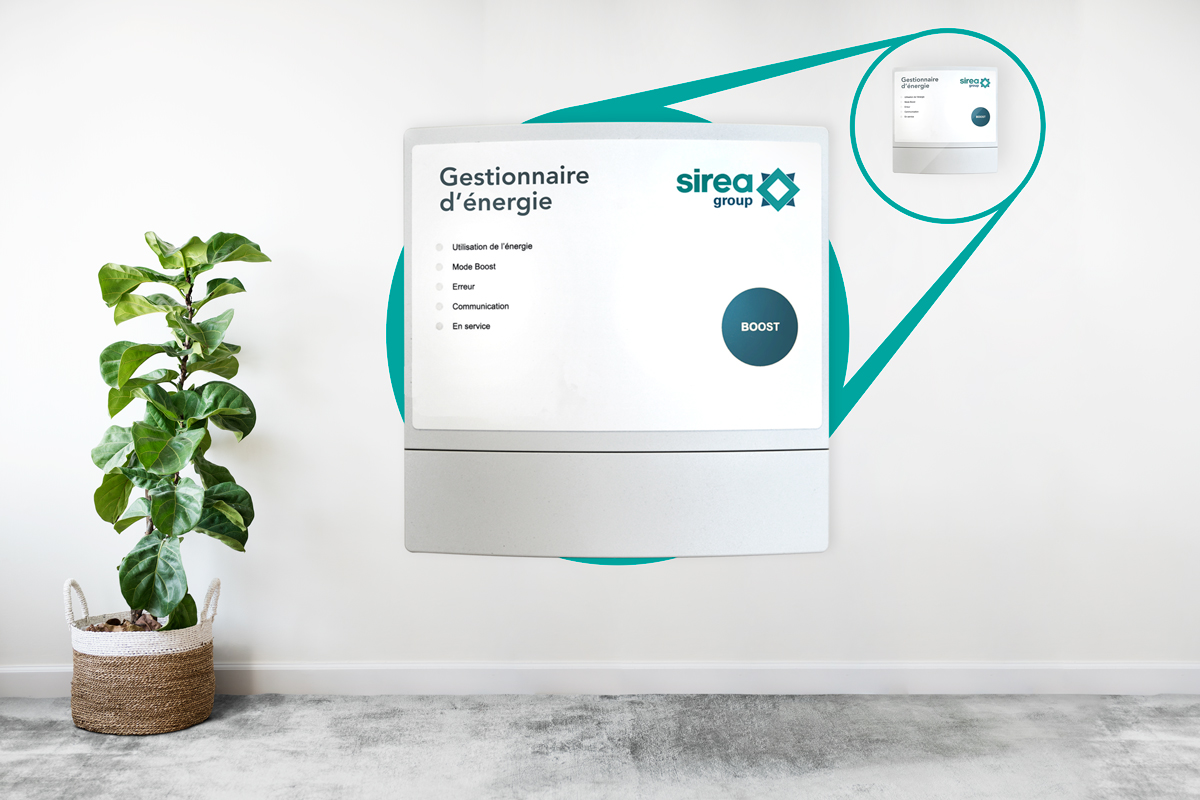
SmartEMS, in concrete terms
SmartEMS of Sirea
As a specialist in energy management for several years, Sirea has developed an energy manager to optimise the use of photovoltaic production by controlling the different loads of a site or building.
The idea, thanks to this small box, is to be able to take full advantage of the energy production potential offered by a photovoltaic installation by correlating the phases of energy consumption with those of solar production.
The Solar Impulse label, an award of choice
Carried by Bertrand Piccard, the Solar Impulse Foundation awarded the SolarImpulse Efficient Solution label to our SmartEMS on Thursday 10 December after several months of evaluation by a team of experts.
Thanks to this prestigious award, SmartEMS is now one of the 1000 solutions selected by the foundation to promote growth that takes into account climate and environmental issues.
The problems to which SmartEMS provides concrete answers, such as better energy management and use, give it a prominent place in this catalogue of solutions which will be presented in 2021 by the Solar Impulse Foundation.
What are the development prospects for SmartEMS today?
To date, SmartEMS has been deployed in various companies and structures to solve problems related to energy-consuming equipment.
Initially, it helps to reduce the energy expenses related to the thermal management of buildingssuch as air conditioning or heating (the highest share of consumption on average). To do this, SmartEMS automatically controls equipment according to the amount of sunlight and therefore the photovoltaic energy available at the time (or stored).
SmartEMS for the thermal management of buildings
Another use case, focused on the development of electric mobility, consists of controlling the charging of electric vehicles according to the energy available in battery storage or supplied by solar panels. The system is doubly effective since, in addition to prioritize photovoltaic energy over that of the public electric grid, it can respond to the high power demands induced by the rapid recharging of vehicles, thanks to the control of several energy sources (PV, battery storage, hydrogen storage).
Sirea recharges its electric vehicles with solar energy
The solution has already been deployed at several of our customers and also at our site in Castres (France), which acts as a demonstrator to illustrate the extent of the possibilities in terms of piloting.
The year 2021 should thus enable Sirea to put a hydrogen storage system into service, to take advantage of the surplus energy offered by its photovoltaic car port almost a year ago.
The advantages and possibilities offered by SmartEMS are available on our site and now on the SmartEMS page of the Solar Impulse platform.
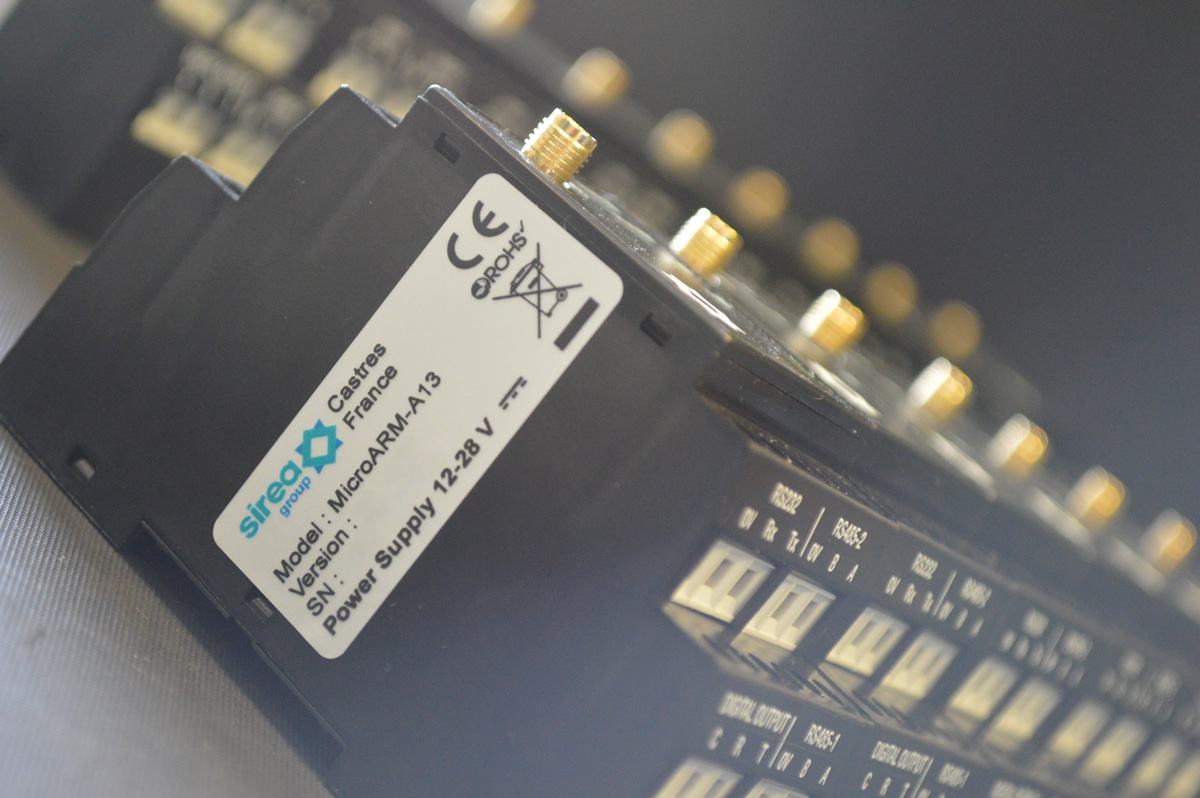
Developed over the last 10 years, our industrial PLCs have seen the arrival in 2020 of a small new addition to the MicroARM range, which should bring the world of connected objects and industrial automation even closer together
MicroARM-A13
Named MicroARM-A13 (13th of the name), this new very compact programmable microcontroller fulfils its control and data acquisition function. It is equipped with several communication ports so that it can dialogue easily with most systems in the IoT and industrial environment. What differentiates it from other microcontrollers on the market is the integration of a LoRa module within the PLC, allowing it to be used in many IoT architectures based on LoRa or LoRaWAN networks, whether public or private.
It is a new product that meets many of the requirements of today’s architectures: space requirements, network compatibility, reliability and performance. The A13 is a revolution for IIoT projects since it is the first on the market to integrate this future-oriented technology!
Bruno Bouteille, CEO of Sirea
Today, MicroARM-A13 has been deployed by major players in the energy world on photovoltaic monitoring systems and self-consumption buildings. It allows data linked to production and consumption to be transmitted via the LoRaWAN network and then consulted on a supervision interface.
We have also deployed this new product in several factories to collect and centralise, again via a private LoRaWAN network, machine operating states to our client’s CMMS system. The PLC is effective in collecting all types of data (temperature, metering), for example in the context of equipment monitoring (water, gas, electricity).
Production of Sirea MicroARM-A13 range PLCs
It is a true « made in France » product that we will seek to label since the MicroARM-A13is designed and manufactured on our premises in Castres (France).
David Barreau, electronics lab manager at Sirea
This year we have renewed our « Origine France Garantie » label for the flagship of the MicroARM range, the MicroARM-A2. The latter is also implemented in many production plants for the control of machines and industrial equipment.
Every summer, energy expenditure for air conditioning systems increases steadily in most companies. At Sirea, we have decided to take the plunge and automate the control of air conditioning according to the energy produced by our photovoltaic carport deployed this winter.
21 kWp photovoltaic carport at Sirea
On sunny days, it is warmer in the offices, and everyone can easily turn on the air conditioning to get a little freshness in their office. But the use of air conditioning, even in « economy » mode, is not optimised to limit unnecessary energy consumption and waste. This is why we wanted to play our cards right by significantly reducing the costs associated with the use of our air conditioners thanks to our energy manager, SmartEMS.
Indeed, the more sunshine there is, the more energy the photovoltaic panels will be able to provide to power these air conditioning systems. It then becomes interesting to use them in a way that is proportional to the production of our solar carport. As a result, the energy required to power the air conditioning systems no longer comes from the electricity grid but directly from the photovoltaic carport, guaranteeing reasonable comfort in the offices and avoiding waste.
So, SmartEMS makes it possible to considerably optimise the company’s energy efficiency. It controls the air conditioning systems by playing on the inertia of the building and the energy production by the photovoltaic system.
SmartEMS of Sirea
The advantage of this device is its simplicity of deployment considering his compatibility with most of air conditioners manufacturers.(Daikin, Samsung, Toshiba, LG, Mitsubishi, Panasonic or Midea), which avoids any equipment replacement.
The intelligent manager communicates with WiFi gateways that then communicate infrared with the air conditioners. The intelligence resides in the SmartEMS algorithm, which has been programmed to control this equipment in priority over others.
Among the many management possibilities, the combination of photovoltaics with automated air-conditioning management is an opportunity to be seized by many companies wishing to begin or continue their energy transition.
Bruno Bouteille, director of Sirea
Other deployments of this system should see the light by the end of the year, mainly in the overseas regions (Reunion Island), where thermal equipment accounts for a large share of energy consumption.
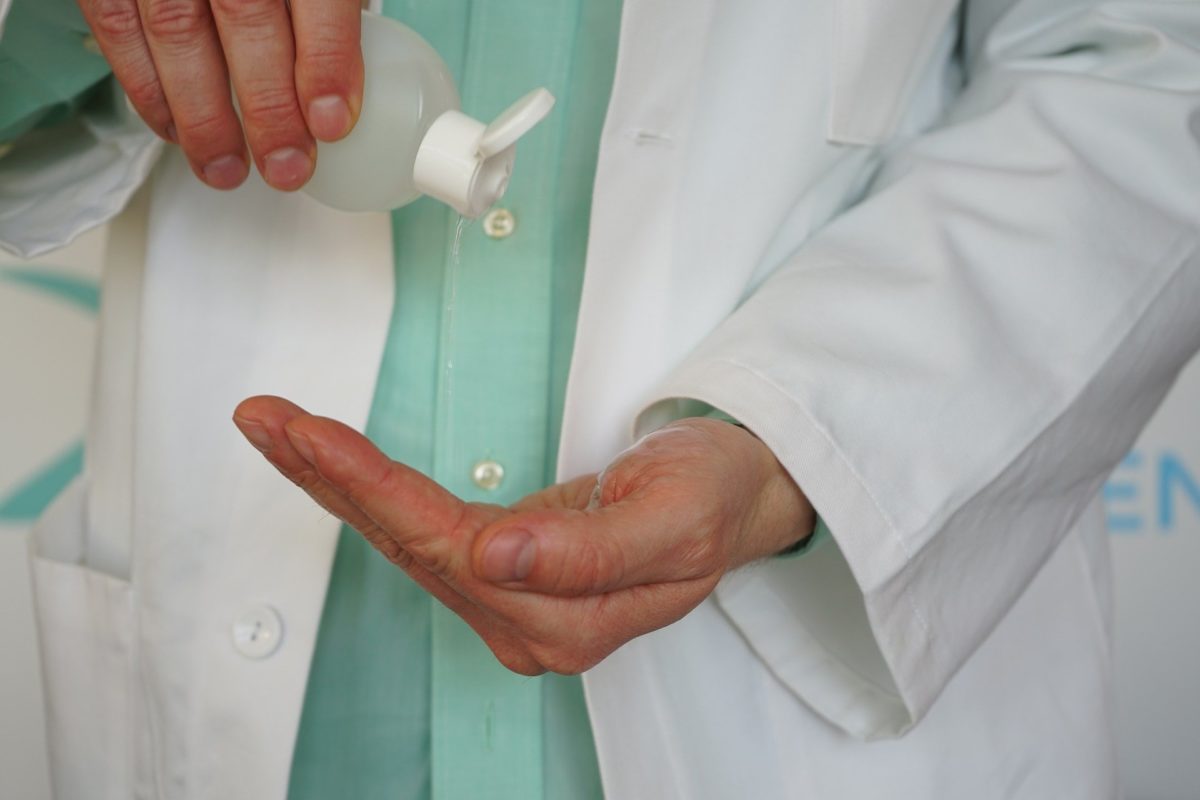
Due to the Covid-19 health crisis, where France had to face the shortage of disinfectants, Solea, subsidiary of Sirea Group, is going to roll out its disinfection system in Europe. This system was developed in the context of water purification projects for Africa, in particular Madagascar for UNICEF.
This disinfection and decontamination system, called AURA (Antiseptic for Universal and Reliable Applications) allows the production of sodium hypochlorite by electrolysis from a simple solution of water and salt. It can produce 8 litres of the decontamination solution in less than 4 hours, either from solar energy or conventional power.
Autonomous AURA solar system by Solea
The system is designed to always ensure the minimum concentration for a universal antiseptic (5g/L or 0.5%) regardless of the installation site and the ingredients (water and salt) used, while integrating the set of industrial fabrication parameters.
AURA is shipped ready to use and allows the recipients to make their own disinfectant solution autonomously. Regardless if in a city’s hospital or in a small health centre in the rural area. They won’t depend on shipping from exterior and they can directly use it to disinfect surfaces or wash their hands by watering down the solution.
Franck Bernage, Director of Solea
Besides being compact and light (13kg), AURA is an innovative alternative. For one thing for environmental reasons, because powered by solar energy the system limits greenhouse gas emissions. For another thing, by local production, it allows to limit the impact caused by the procurement. This system offers also a non-negligible waste reduction. When functioning on solar energy, the recycling problems are resolved by removing the battery. At the same time the use of plastic flasks and bottles is reduced.
In addition to being innovative and having a positive impact for society, this is a noticeable technological advance. The electronic circuit board was especially developed for this application and allows the system to be adapted to the use case.
Bruno Bouteille, President of Sirea Group
As reminder, AURA is going to be used with the disinfectant robot which is currently being developed with the companies from CleanTechBooster (Innowtech, Fadilec, Alfileo) and Sterixene.
Working on electrical equipment of all sizes around the world, Sirea’s teams now rely on their strong experience in the business, but also on recurrent training of the staff to maintain and deploy new electrical installations.
This expertise has been recognized and validated for several years by the Qualifelec organization, which has renewed Sirea’s MGTI.2 qualification. This certificate ensures the customer compliance with electrical standards and technical requirements by the service provider, and applies to the interventions on medium and large facilities in the tertiary and industrial sector. The mentions “study and design” and “automatisms” have been added to this qualification.
Growing on the market of power generation facilities, especially after the launch of the AEA self-consumption cabinet range, the company has obtained the qualification SPV1.2 with the mention RGE. This mention was created by the government to make it easier for the consumer to find the best companies in the field. This new certificate attests the quality of services provided by Sirea on photovoltaic solar installations up to 36 kVA.
This further meets the quality and safety requirements for mutual trust between employees, partners and customers.
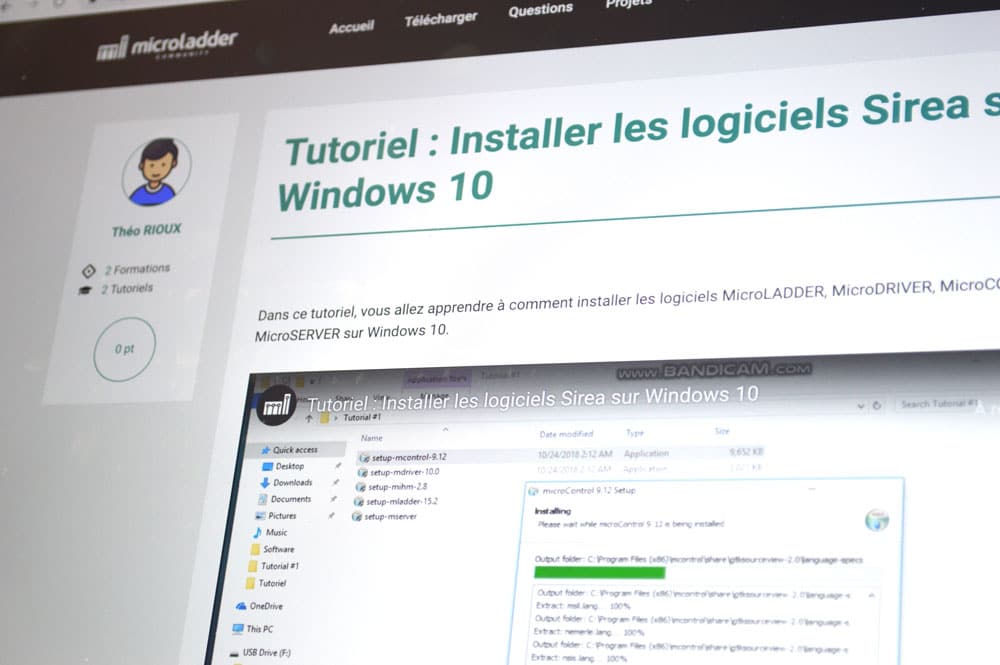
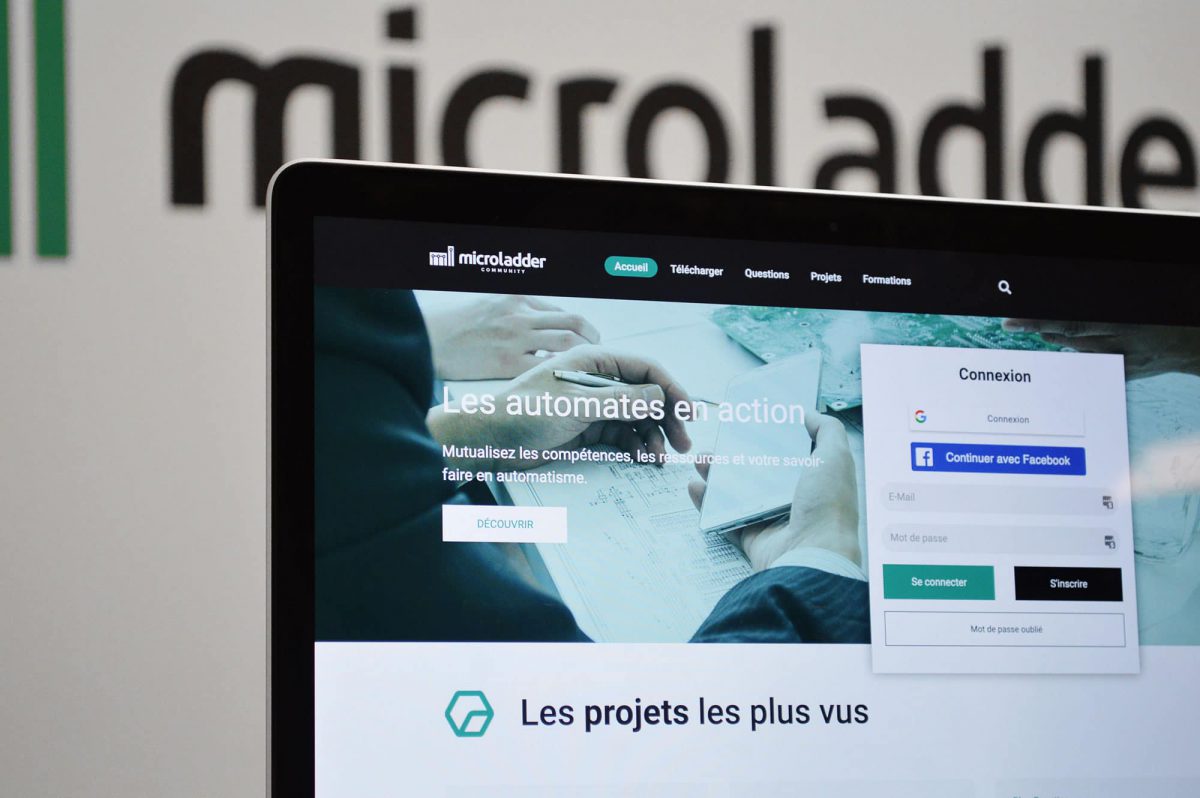
It is now easier to train in the programming of automation and the use of programming software as MicroLADDER thanks to the new video tutorials published on our community site.
MicroLADDER Community e-learning
Set online at the beginning of the year, the MicroLADDER Community site, which has a lot of new features delighting our registrants, allows to host tutorials and trainings to improve their automation skills.
Regularly, tutorials are published by our teams to facilitate the grip of MicroLADDER but also to learn how to use the basic functions blocks of the standard library (coming soon).
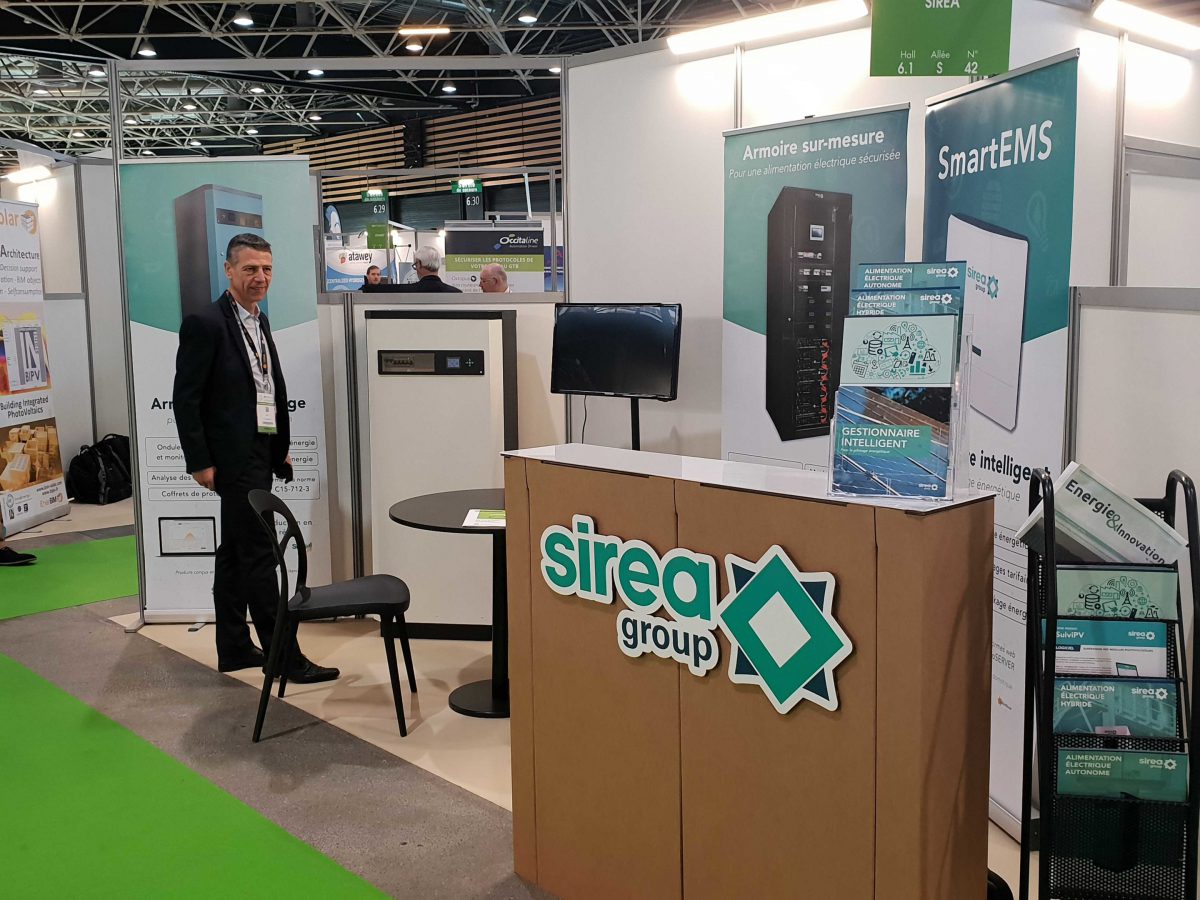
We took advantage of BePositive show which was held in Lyon from the 13th to the 15th of February, to unveil a new version of our flagship product in residential format.
Designed in the most compact format to meet market demands, this new AEA cabinet model (for “alimentation électrique autonome” or “autonomous electric power supply”) will allow users to self-consume their renewable energy production by occupying very little space in the housing.
Bruno Bouteille at BePositive 2019
“Our research office has worked several months to design a product that takes into account all the constraints of users who wish to switch to renewable energies.” says Bruno Bouteille, CEO of Sirea.
Even in smaller format, the AEA cabinet, contains all the features that have made its success: self-consumption with battery storage, power converter, inverter control if no wish of reinjection on the power grid, hybridization with other power sources such as hydrogen, autonomy in isolated sites.
Deployed over the last few years on several industrial sites that already had switched to self-consumption, the solution is now available under an offer adapted to the individuals. It is even possible to estimate for free, the performance of the cabinet by sizing its photovoltaic installation on the website www.autoconsommation.eco, which was also presented at BePositive.
“Being able to demonstrate a solution at an event such as BePositive is a great opportunity for a successful launch, which is more with such a compact product: The cabinet doesn’t even clutter our booth anymore!” explains Laurent Duchesne, consultant and specialist of self-consumption, who has been working for several years on our side.
With this new product, we intend to position ourselves in the market of ultra-compact self-consumption solutions to facilitate the integration of renewable energies in households, on powers of 3 to 5 kW.
Since the beginning of the year, the programmers of Sirea’s PLC can navigate on a new version of the community platform, providing many features!
The new MicroLADDER Community
Originally, MicroLADDER Community aims to pool the resources of programmers allowing them to save time in the development of their automation project. Indeed, through the sharing of functions block accompanied by the documentation, it is easy to re-use functions already coded: just download them and import them into MicroLADDER, a breeze!
Lots of features
But today, the platform goes further by allowing users to contribute to the improvement of the function blocks via the versionning. Thus, it is possible to download, modify, and return the function blocks to its owner that only has to validate the file if he is happy with it.
The new version now hosts a section dedicated to training, which will allow seasoned users to offer tutorials as well as complete trainings accompanied by videos, which can be found directly on the published projects.
The forum of the platform has also undergone a small facelift to become a real knowledge base, working on the same principle as the famous site Stackoverflow, where the best answers to the questions are evaluated and put forward by the community Itself.
Better performance
The idea of this redesign was based not only on the addition of functionalities, but also on the improvement of performance. The choice was made to collaborate with Freshcore web agency based in Soual, which offered us its content management technology to administer and host the community.
Thus, the site now works on a non-relational database via MongoDB, managed by the provider’s Melba CMS. It works more in Javascript both client-side and server-side to gain speed when processing queries.
A local collaboration
It can be said that the redesign of MicroLADDER Community is made a 100% in Tarn region. The project has been supervised from our premises in Castres and fully developed by Freshcore teams based in Soual.
In this way, the communication on this major project has been greatly facilitated by focusing on constructive discussions and exchange of ideas around a coffee in the premises of one of the two companies.
A big thank you to the teams of Freshcore who accompanied us in the revamp of our platform, and thanks also to users who have made us many returns to improve their social network.
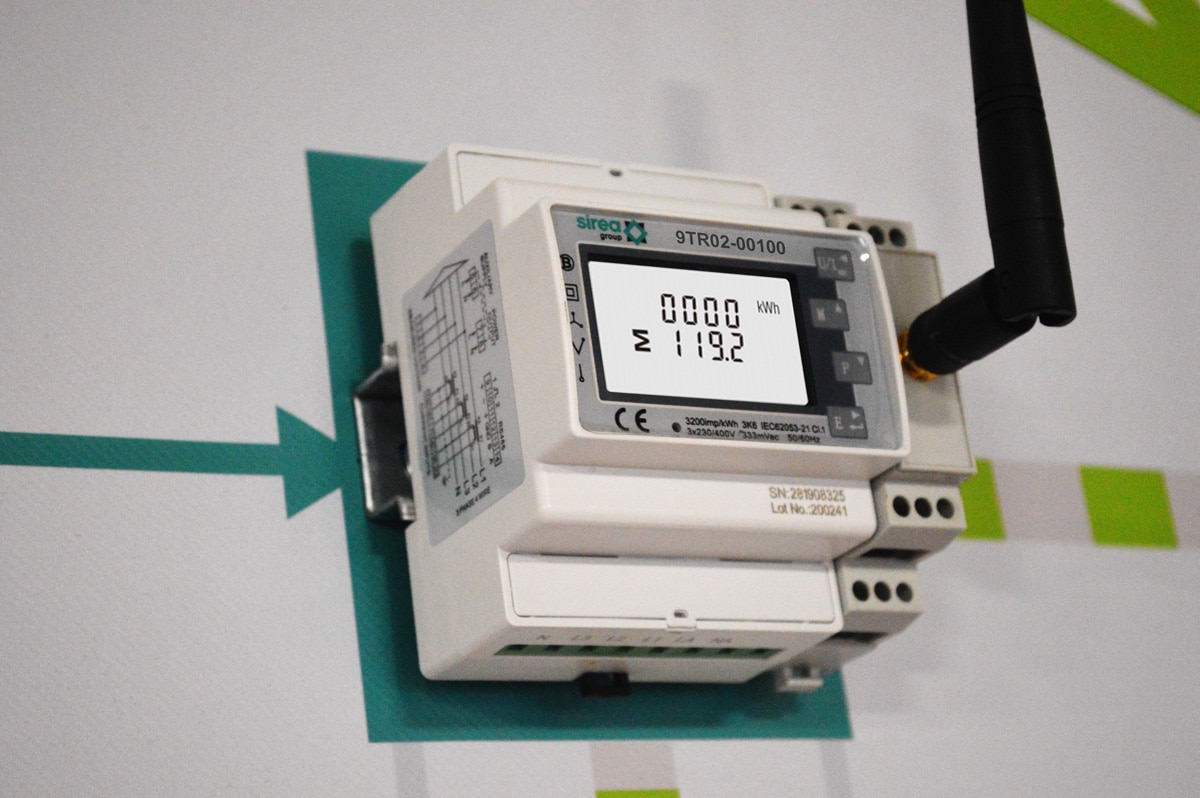
The new Sirea transducers are now available on our Sirea online shop.
Sirea 9TR02-00100 transducer
More ergonomically designed, allowing to manage more data, these new single-phase and three-phase transducers adapt to the measurement of first-generation smart panels. Used in the electricity transmission and distribution system, they are also very effective in measuring and analysing the electrical consumption of high voltage smart power grids.